February 5, 2026
The Ownership Test for Payment Infrastructure: Why Merchants Are Moving From Traditional Acquiring to Self-Custody Solutions
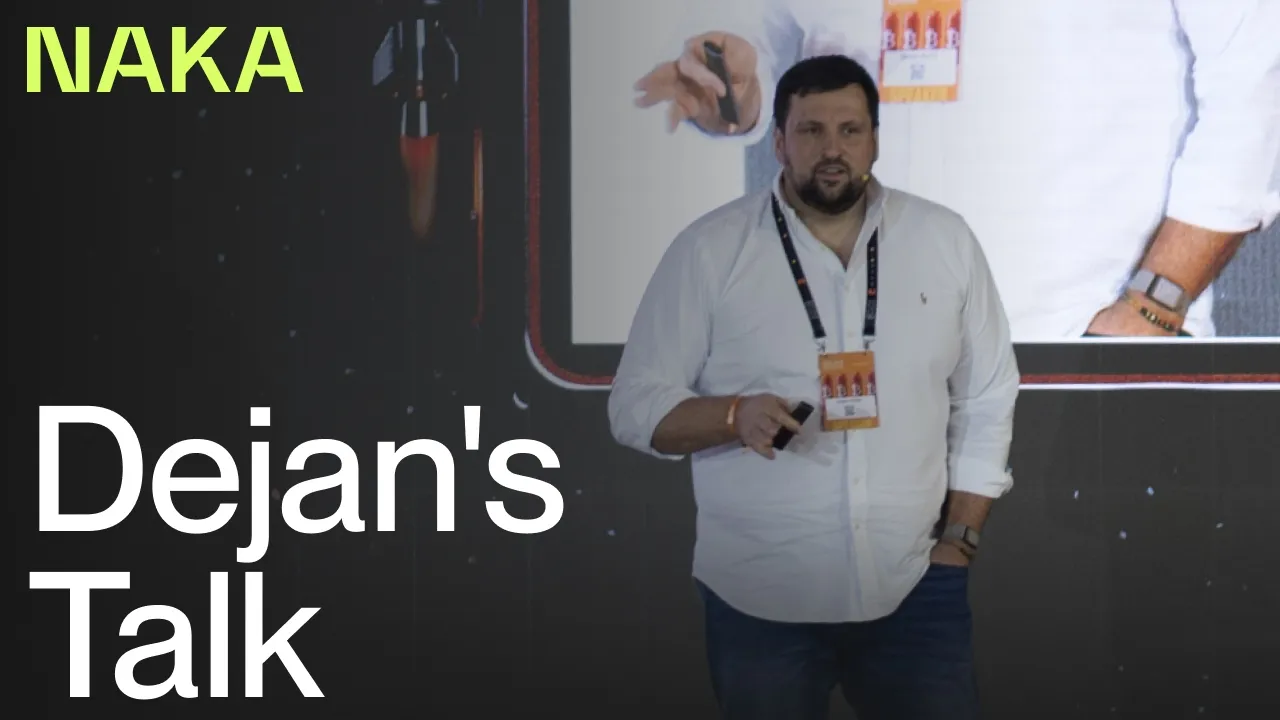
In his keynote from the WAGMI stage at the Plan ₿ Forum 2026, NAKA Funder & CEO Dejan Roljic explores the critical shift from institution-controlled systems to user-owned infrastructure
The financial headlines of the last few years have felt like a slow-motion car crash. We’ve witnessed the sudden freezing of accounts without notice, a global "de-risking" trend that leaves businesses and individuals stranded. We’ve seen the collapse of institutional giants like FTX, and the quiet struggle of legacy payment processors like Worldline, which reported a €4.1 billion impairment on its merchant services in 2025 due to a "long-lasting" shift in the payment market.
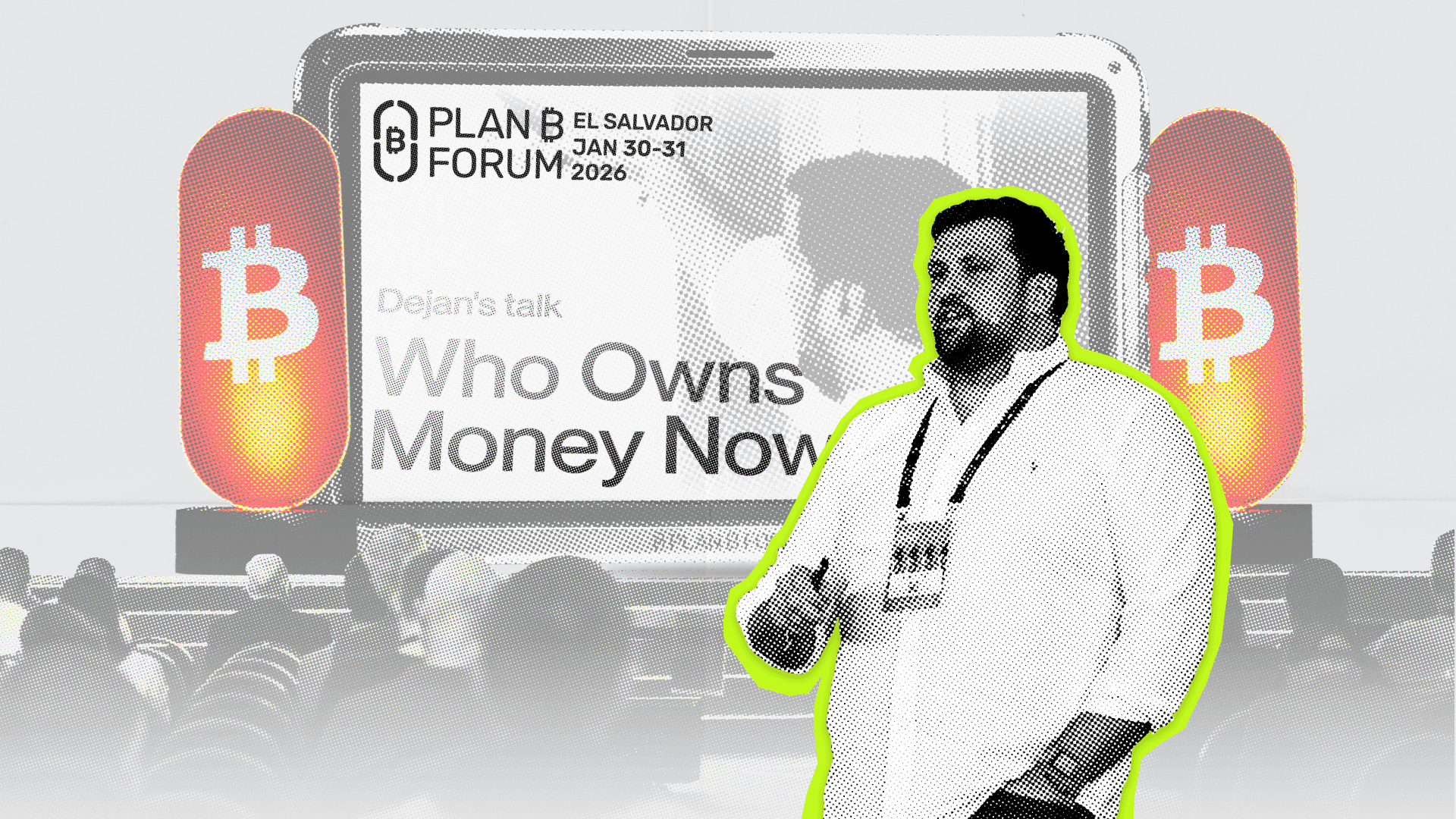
These are symptoms of a systemic failure in the way we define ownership. At a recent keynote at Plan B Forum El Salvador 2026 titled "Who Owns Money Now", NAKA Founder and CEO Dejan Roljic addressed the uncomfortable truth behind these failures. The issue isn't just technology. It’s a psychological trade-off we’ve been making for decades: Comfort vs. Control.
The "Trust" Illusion
Most people believe they give money to banks because they trust institutions. Dejan argues the opposite: "People didn't give institutions their money because they trusted them more... They did it because they trusted themselves less".
We outsource the management of our wealth to avoid the burden of being accountable for it. When a bank makes a mistake, they offer you a coffee, sit you down, and tell you they have "got your back" with insurance and support desks. This creates a forgiving system. However, this comfort comes at a high price: the banks, or the governments behind them, ultimately hold the keys to our wealth. If they fail, or if you fall out of favor with the system, your "ownership" vanishes instantly.
The Ownership Test
How do you know if you actually own an asset? It isn’t about whose name is on the digital screen; it’s about what happens when the system is under "apocalyptic" stress. Dejan proposes an Ownership Test consisting of eight pillars. If an asset fails even one, your money is only partially yours.
Key Control: Do you personally control the private keys?
Survivability: Does it survive company failure, regulation, or leadership loss?
Finality: Are transactions irreversible unless you choose otherwise?
Credible Exit: Can you leave the system at any time with your value intact?
Decentralized Power: Is control resistant to capture by a single entity?
Permissionless Use: Can you transact without approval or risk of a freeze?
Rule Stability: Can monetary rules, like total supply, change without your consent?
Livable Self-Custody: Can a "Regular Joe" hold it safely without being a tech expert?
The Migration of Value: Gold vs. Bitcoin
The comparison between Gold and Bitcoin is often debated, but they share a fundamental DNA: they don't depend on issuers, don't rely on promises, and don't require permission.
While gold remains a massive global asset, accounting for 45% of the above-ground stock, it is difficult to move in a crisis. This is where digital finality changes the game. Data shows a promising shift in user behavior: while over 17% of the Bitcoin supply was held on exchanges in 2020, that number fell to less than 11% by mid-2025. People are moving their wealth into off-exchange custody.
The reality of this shift is visible in emerging markets. In 2024, global stablecoin transfer volume reached $18.4 trillion, officially outpacing the annual volumes of both Visa ($15.7 trillion) and Mastercard ($9.8 trillion). This is a live example of infrastructure migration, not just theory.
User-Owned Infrastructure
If people have been choosing institutional comfort over personal control for centuries, why is the shift to self-custody happening now?
The answer is that the trade-off has changed. We are entering an era where you no longer have to choose between a "forgiving" system and a secure one. Several factors are converging to make user-owned infrastructure the most logical path forward:
Users become their own banks, controlling wealth through secure, livable self-custody that doesn't require technical "heroics".
Merchants become their own acquirers, settling payments directly and removing the middle layers that thrive on friction and high fees.
As Dejan puts it: "Responsibility may be outsourced; Accountability stays with you". By providing tools that satisfy the Ownership Test in daily transactions, NAKA bridges the gap between legacy control and user-owned autonomy.
Share this post