January 12, 2026
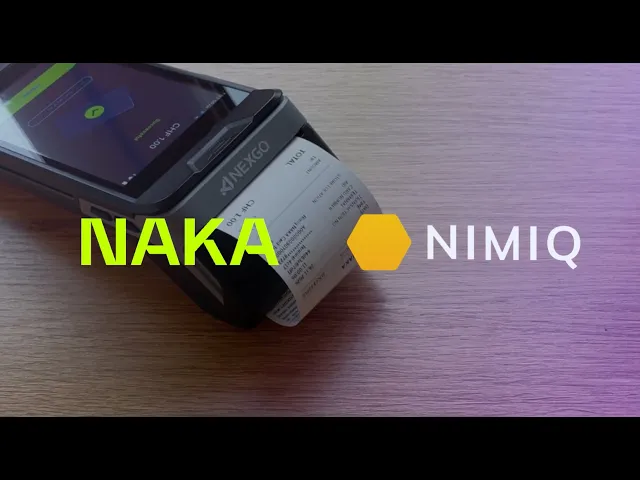
Nimiq Launched a Virtual NAKA Card to Make $NIM Merchant-Ready
Discover why Nimiq launched its own self-custodial virtual NAKA Card
Meet Nimiq: Where Self-Custody Isn't Negotiable
At the core of Nimiq's blockchain and ecosystem is a principle that appears straightforward but is still highly unconventional in today's financial landscape: users should have true ownership of their money. Not diluted ownership through intermediaries, and not constrained by custodial control, but full and direct access to their assets, something we value deeply in our own approach to payment infrastructure.
Their ecosystem includes a wallet, payment app, and a growing blockchain network that lets users stake $NIM and earn rewards. The challenge wasn't that users couldn't access their staking rewards, but that spending them meant converting back to fiat through exchanges. This process contradicted Nimiq's founding principle of self-custody, added unnecessary friction, and introduced exchange fees at every transaction. The Nimiq community wanted to spend their $NIM directly for everyday purchases, keeping their assets in the currency they chose to hold without being forced back into traditional finance rails.
The Challenge: Self-Custody Meets the Real World
With more users eager to put their staking rewards to use, Nimiq began examining how everyday payments could work without compromising self-custody. That search quickly revealed the limitations of existing card solutions. Most payment cards that offered the familiar tap-to-pay experience came with a catch. Users had to give up custody of their funds. A third party would hold the crypto and pull money whenever a payment went through.
For Nimiq, that was a non-starter.
"Nimiq is a strong advocate of self-custody, that model wasn't an acceptable path forward," Max Burger, Nimiq’s Ecosystem Development Lead, explained. "We always wanted to combine the best of both worlds, by enabling users to keep their established payment behaviours while still maintaining full control over their coins through self-custodial $NIM payments."
Beyond the custody question, there was the practical issue of acceptance reliability. Even when merchants technically supported crypto, payments failed because of hardware issues, connectivity problems, staff confusion, or outdated information. Users would show up to a location listed as crypto-friendly, only to find it closed, changed ownership, or simply unable to process the payment.
And this is where NAKA entered the picture. Among the few payment networks exploring virtual cards, NAKA was one of the only ones built with a self-custodial architecture from day one, the exact requirement Nimiq wasn’t willing to compromise on.
The Solution: Making "It Just Works" Actually Mean Something
“We recognized the potential of NAKA’s virtual card approach early on. It allowed us to keep people’s established habits while maintaining full control over their assets,” explains Max. It’s how the next stage of our partnership with Nimiq clicked into place.
Our partnership with Nimiq spans several years, built on a shared commitment to self-custody and user sovereignty. When they were ready to bring payment functionality to their users, the Virtual Nimiq NAKA Card came together quickly. Powered by our EMV-compatible payment network, it delivered the solution Nimiq needed: self-custodial payments with the reliability users expect.
Here's how it works.
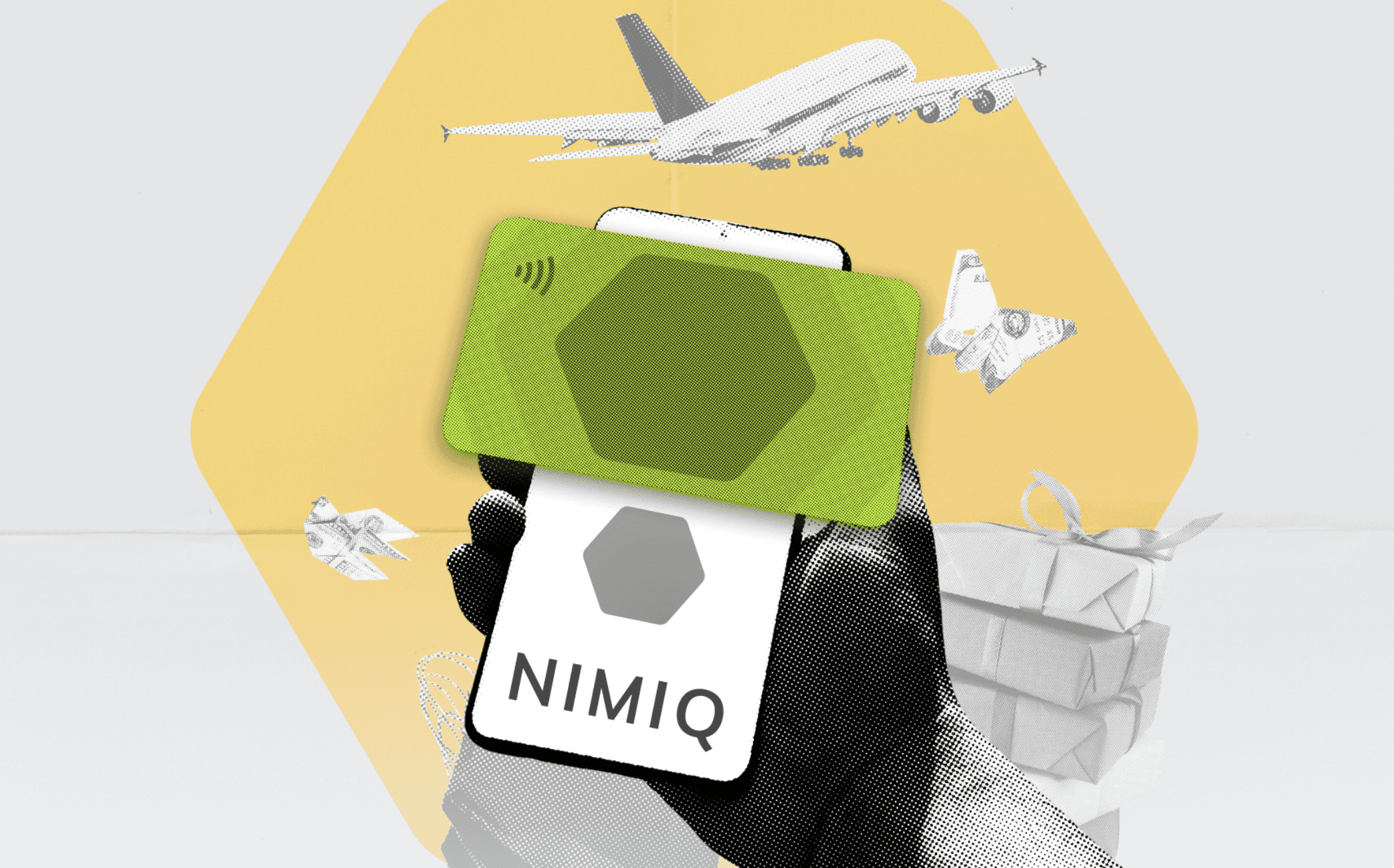
Nimiq Pay app serves as the payment interface where Nimiq users can spend their $NIM at acceptance locations. Now, they can extend that payment capability to even more real-world purchases with the Virtual Nimiq NAKA Card, integrated directly into the app.
The card connects to their self-custodial wallet, meaning users maintain full control over their $NIM. When they tap to pay at any POS terminal integrated with the NAKA Card Payment Network, the payment processes through our blockchain-based infrastructure, converting their $NIM in real-time while routing through the merchant's existing payment setup.
Ever since Nimiq first explored bringing crypto payments to their user base, they encountered the operational challenges that still shape the user experience today. Acceptance locations were difficult to verify in real-time. Users arrived at supposedly crypto-friendly merchants only to find closed businesses, changed ownership, or systems no longer configured to process digital currency. Even at active locations, successful payments depended on charged hardware, stable connectivity, and trained staff.
For Nimiq, these reliability issues presented a clear problem. Their community wanted practical ways to use staking rewards for everyday purchases, but existing infrastructure couldn't guarantee the seamless experience users expected while preserving the self-custody principles central to their vision. That's when we started talking.
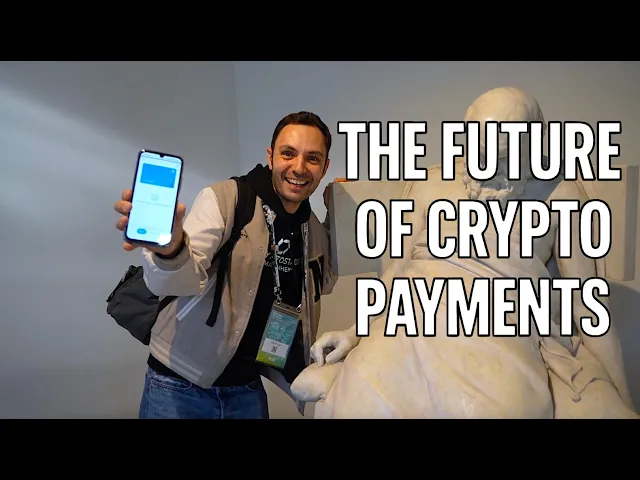
For merchants, there's zero operational lift. If their acquirer is a NAKA acceptance partner, they're already equipped to accept these payments. They don't need new hardware, special training, or lengthy onboarding processes. The payment shows up on their terminal like any other card transaction.
Max describes the impact: "This 'it just works' experience is where we see the greatest value for users. And presenting this reliability through a familiar interface, a virtual card and tap-to-pay flow that people already know and use, makes it even more intuitive."
The early results back this up. During internal testing with team members and friends in Switzerland, the feedback centered around simplicity. Testers could reliably complete payment after payment, without wondering if this location would be the one where things broke down. That consistent experience, that certainty, is what moves crypto payments from novelty to utility.
What's Next: Expanding $NIM Usability
"With the $NIM-powered payment card, Nimiq didn't just ship a feature, they showed what user-owned money looks like when it finally reaches everyday life. No buzzwords, no theory, just tap and go. This is the direction we believed in from day one of our collaboration nearly five years ago. Today feels big, but it's nowhere near the ceiling." - Dejan Roljic, CEO & Founder of NAKA
The Virtual Nimiq NAKA Card is live, but this is the starting line rather than the finish. The number of acceptance points for $NIM is growing each day, expanding the locations where users can experience self-custodial $NIM payments in everyday life.
The roadmap also includes exploring rewards and cashback mechanisms that could incentivize users to spend their staking rewards at participating merchants, creating a flywheel effect for both user engagement and merchant adoption.
For now, Nimiq users in acceptance regions can open their app, find nearby locations, and pay with their $NIM knowing the transaction will work. That reliability, that peace of mind, is what turns theoretical adoption into actual usage. And actual usage is what matters.
This is one of the clearest examples of self-custody working at real scale, and we’re proud to support Nimiq’s community who now get to experience it in their daily lives.
If you’re exploring crypto payment solutions for your business as well, contact us and we’ll discover how we can work together.
Share this post